Case Study: HNI Mutual Fund Advisory, Bangalore
How an advisor managing ₹180 crore AUM stopped defending fees in review meetings.
This case study is an illustrative account based on typical advisor repositioning patterns.
12 years. 40+ HNI families. ₹180 crore AUM.
A Bangalore-based mutual fund distributor with 12 years in practice, managing over 40 HNI families with a combined AUM of ₹180 crore. By every conventional measure, this was a successful practice - consistent performance, long-standing relationships, and steady referral flow from within an established client network.

Years in Practice
Location
AUM Managed
HNI Families

Strong foundations. Positioning that didn't reflect them.
But every review meeting felt adversarial. Clients arrived prepared to question the advisory fee. They compared the relationship to direct platforms. They challenged returns against benchmarks.
Despite the depth of advisory work being delivered, the conversation repeatedly started from the same position: the advisor justifying their right to be in the room. The practice had strong foundations. The positioning did not reflect them.
What the advisor was experiencing before the positioning work.
Fee conversations in every review
Despite strong portfolio performance, clients arrived at review meetings already prepared to question the advisory fee. The conversation was defensive before it began.
Compared to direct platforms
Clients were benchmarking against zero-commission platforms, treating the advisor as a cost rather than a source of value.
No positioning language for advisory depth
The advisor had no clear articulation of what separated their advisory relationship from what a platform could replicate.
What shifted when the positioning was rebuilt.
Clients asked about thinking, not fees
Review meetings shifted from fee justification to discussion of investment philosophy and portfolio logic.
Positioned as advisor, not distributor
Clients began describing the relationship in advisory terms — not product terms.
Reviews became substantive conversations
The agenda of review meetings changed. The advisor led with insights; clients followed with engagement.
From fee justification to leading the conversation.
The repositioning work did not change the quality of the advisory work being delivered. It changed how that work was understood by clients - before they entered the review meeting.
When clients arrive already understanding the depth of the advisory relationship, the conversation shifts. The advisor stops justifying their presence and starts leading with insight.

Four areas where the work was done.
Practice Language Repositioned
Replaced distributor language with advisory language across every client-facing touchpoint.
Review Meeting Agenda Rebuilt
Restructured the standard review meeting to lead with advisory insights rather than performance data.
Fee Articulation Made Explicit
Built a clear, confident statement of what the fee covered — in terms of advisory depth, not product access.
Client Briefing Updated
Every new client received a written statement of advisory philosophy before the first meeting.
“When the market understands your advisory depth before the review meeting begins, you stop justifying and start leading.”
The books most relevant to this case study.
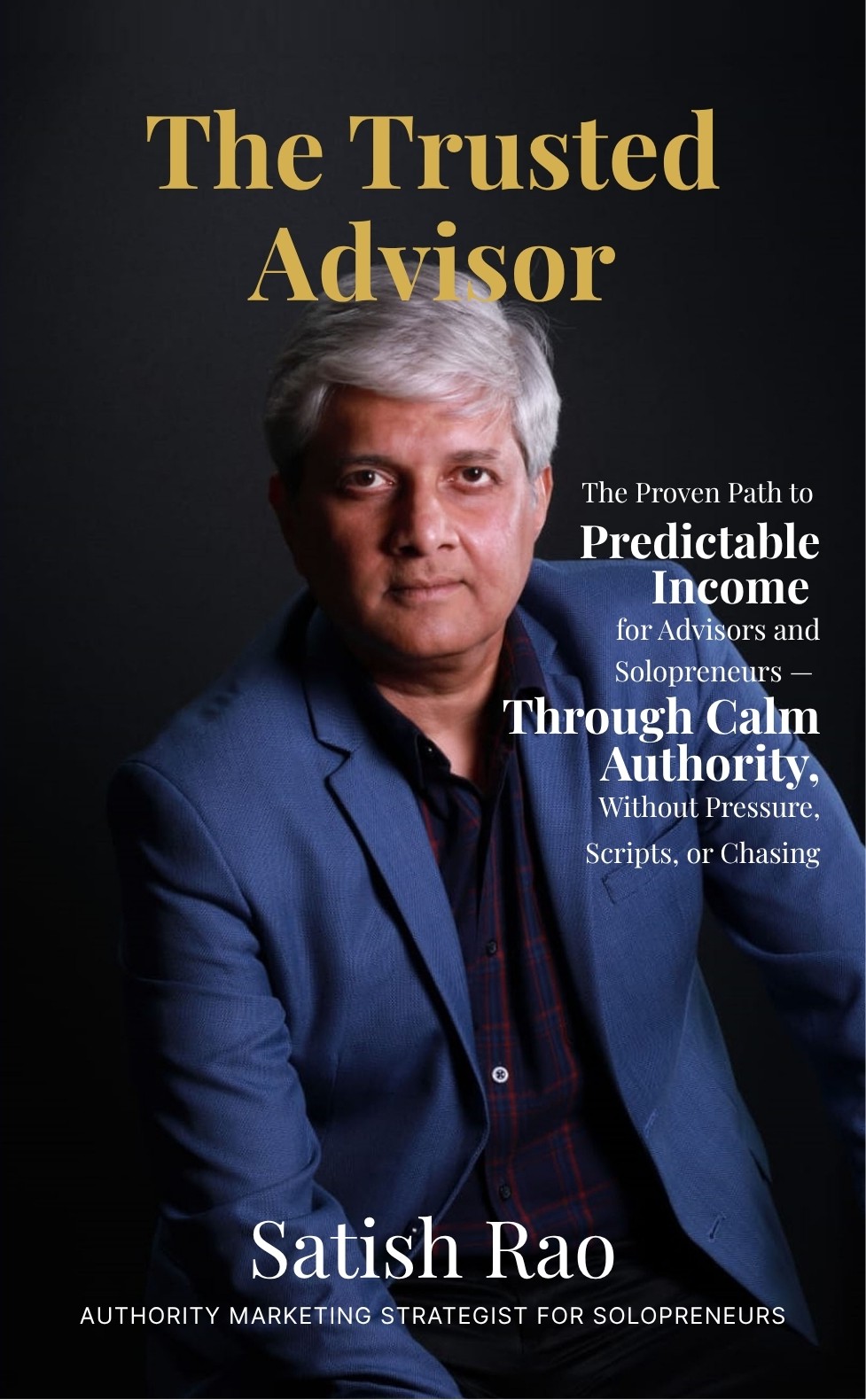
The Trusted Advisor
Close the Identity Gap, Lead with Calm Authority and Create No-Chase Income
For advisors who are in the room with the right clients but still find that conversations drift toward fee justification rather than advisory engagement. This book addresses The Identity Gap — who you are showing up as in the room — and gives a structured method for leading client conversations from a position of settled authority.
Explore the Book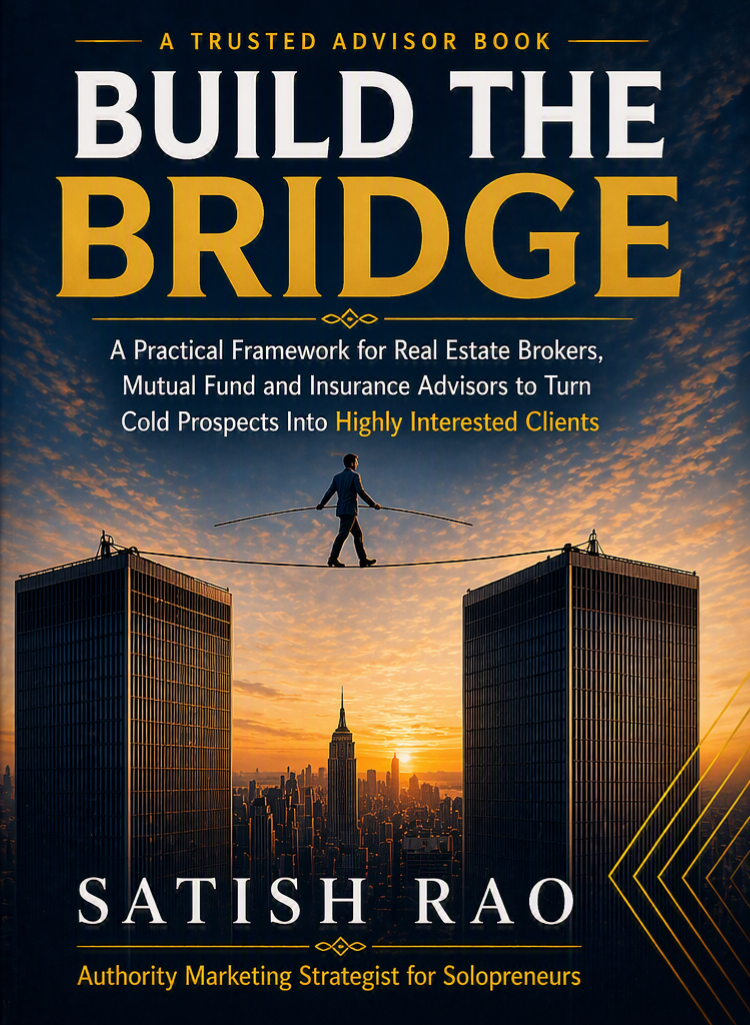
Build the Bridge
From Invisible Expert to Recognised Authority Before You Ever Speak
For the advisor whose identity is recalibrated but whose market presence has not yet caught up. This book closes The Standing Gap — attracting the right HNI clients before the advisory conversation begins.
Explore the BookJoin The ABC Club
Join The ABC Club — free, no pressure, leave at any time.
The ABC Club is the community of advisors learning the Authority Before Contact body of work. Read this case study and recognise your own situation in it? This is where advisors doing this work connect, share, and build on what case studies like this one surface. Free to join.
-
Positioning frameworks
Practical frameworks for building authority before first contact - shared directly from Satish's advisory work.
-
A peer community of serious advisors
Connect with experienced advisors across India working on the same positioning and trust-building challenges.
-
Case study discussions
Deep dives into real advisor repositioning stories - what changed, what worked, and why it worked.
-
Resources and templates
Downloadable tools, referral briefs, positioning language guides, and conversation starters.
-
Direct updates from Satish
New insights, book excerpts, and community-first material as they are developed - before anywhere else.
Join The ABC Club
Free to join — no pressure — leave at any time.
Begin where this advisor began.
If your review meetings feel more like auditions than advisory conversations, the problem is positioning — not performance. The free masterclass is where that diagnosis begins — one session to understand precisely where your practice is breaking down and what the path forward requires.